The theme of Fast 5 is undoubtedly racing.The entire movie series has revolved around racing cars for money, escaping from the law, and forming a tight knit bond between the people in the racing group.This theme is active, not didactic.The theme is active because it takes you along for the ride.It does not intend to instruct and it is obvious what the theme is.Constant action is taking place; new twists and turns in the story line arise, leading you to the ultimate end.
The main factors in the “Train Rescue” scene are movement, rhythm, and line.The movement is simple because the train is traveling in a straight line, making the quality linear.The train shape as well as the tracks provides line in the scene.The shape most prevalent in the scene is a rectangle.This applies both to the train and the cars.Most things fast are shaped with length and not much width, so this makes sense to add more of a conception of speed to the subtext.
The scale of the bridge in the scene continues to grow as the train approaches it at a constant speed, providing urgency for the viewer.Since the train is moving at a constant speed, this provides a steady rhythm.The rhythm is made apparent because of the surrounding of the train, which includes plants and the steady emission of the dust cloud.This fast pace emphasizes the theme of racing throughout the film.
The linear quality of the train’s direction is broken when the Corvette jumps out of the train at a perpendicular angle.This disrupts the viewer, which adds to the building intensity and urgency within the scene.This urgency builds up tension until the last possible moment that the character can jump from the train.Space is used between the rescue car and the train to make it seem even more impossible that the character will survive.This great distance would be extremely difficult to jump.When the character jumps and the bridge pass by him ever so closely, the audience can take a sigh of relief.
In blog #3, I used the gas station scene from Toy Story.Now, I am able to understand more in depth of what some of the inner workings are.For the most part, the animator follows the three rules of 180 degrees, thirds, and the 30 rule.
In the first shot, the animator uses and OTS behind Woody, facing Buzz.Buzz is in the top left 1/3, exactly in an area described by the Rule of Thirds.This puts the focus on Buzz walking away from Woody, more-so than if the scene was designed in any other way.
The second shot transitions to a WS, instantly putting in play the 30 Rule, by changing the shot by at least two levels.The camera was also moved at least 30 degrees as well.Woody enters from the left and keeps talking over to the right side of the frame.Woody stops directly in the top left third, described in the Rule of Thirds.The 180-degree rule is still kept in this shot.
The third shot cuts to the Pizza Planet truck, which since our eyes are already in the top left third of the screen, enters exactly at that place.This provides a smooth cut.A new 180-degree line is established here.
The fourth show follows the new 180-degree line, put into play in the previous shot.The animator here decides to go with a CU of Woody.The animator does not follow the Rule of Thirds in this shot.Rather, Woody is placed near the center of the screen.
The fifth and final shot I analyzed is a XCU of the Pizza Planet truck logo.This signifies Andy for Woody, and how the two can become reunited.The 180-degree line is still the same in this shot.The 30 Rule, however, is followed in this shot.When we previously saw the Pizza Planet truck, a MS was used.Now, an XCU is used, changing the level of shots by two, using the 30 Rule.
Walace & Gromit is one of my favorite animation series from childhood. I choose two particular scenes from an episode titled A Grand Day Out. The first scene I analyzed is their picnic on the moon, and the second is when they are building a rocket. I will refer to Walace & Gromit as “W & G.”
The two scenes differ quite a bit when it comes to color. Their picnic on the moon is a much brighter scene, with the color scheme generally sticking to two basic hues of blue and yellow. There are some small accents of red and green, but those are character characteristics. When W & G are building their rocket in a basement, the walls and floors are all black, giving off a completely different tone. Since the hues differ so much between the two scenes, it is only natural that brightness and saturation differ as well. In the picnic scene, the setting is generally bright, with some contrast including the dark blue/black space sky. The hues in the scene are not saturated much at all, the color most prominent being light yellow. When W & G build a rocket, there is not much brightness at all, in turn, making most of the hues in the scene very saturated.
Despite the contrast in color, shadows play a large role in each of the scenes. In both the picnic scene and when W & G build a rocket, shadows are present on everything. W & G always have shadows on themselves and shadows always occur as a result of their physical actions. Symbolism is similar throughout both scenes, considering these are taken from the same episode. Starting off with building a rocket, G is very unpleasant with taking part in the project. G is sad holding up the door to cut wood, upset with hammering nails, has extreme trouble with the drill, and in the end has paint dripped all over him. When W & G arrive on the moon, G sees a ball and his tail starts to wag. However, W loses this ball and G’s tail stops waging. Also, both of the characters do not like the cheese on the moon. The mood in the two scenes differs. Even though G is upset building the rocket, the general feeling in that scene is optimism. Upon arrival on the moon, the feeling of loneliness and sadness set in, creating an opposite mood.
i.All sounds from synthesizers.Drums, laser sound, white noise, arpeggiating mono-synths, sub-bass, multiple other synths, ambient arpeggiations
b.Structure/Organization
i.A (intro)/B (drop/chorus)/C (verse-ish)/D(bridge)/ B (drop/chorus 2)/ C (short-verse)/B
c.Emotional Architecture
i.In dubstep, emotion builds up to the drop.The introduction builds up a huge amount of emotion up to the drop and then releases afterwards, like getting to the top of a roller coaster.Emotion also builds towards the last 1/3 of the song, where the theme/chorus is played more often and made to sound bigger.
3.Sound Quality
a.Height
i.Wide range of frequencies, from high pitched cymbals, piano, and lasers, to the deep sub-bass
b.Width
i.Very wide.Certain percussion is panned, arpeggiations are panned, reverbs/delays are also panned and placed
c.Depth
i.Lots of instruments are layered.Some are very soft, others are louder and more upfront/recognizable
Rusko - Everyday (Netsky Remix)
Rusko: Everyday (Netsky remix)
1.Rhythm
a.Tempo
i.Around 176 bpm, very fast, drum & bass style
b.Source
i.Drums.The genre, drum & bass, is based around fast paced drum beats
c.Groove
i.Up and down, makes you want to fist-pump/move arms up/down like at a show
i.A (intro)/B (drop/chorus)/C (verse/break)/D (bridge)/B (drop/chorus 2)/C (verse/outro)
c.Emotional Architecture
i.Leads up through the intro to the first drop where a great amount of emotion is released/exploded.The song relaxes slightly into a steady groove after the first drop but then releases/explodes again when the second drop/chorus comes in
3.Sound Quality
a.Height
i.A lot of heights.Hi-hats, high range voals, low sub-bass, thick mid-range synths
b.Width
i.Lots of panning.White noise hi-hats pan in beginning, delay of arpeggiated synth is also panned
c.Depth
i.A lot of depth. Lots of reverb used on synths and drums, a lot of layering, instrumentation that we don’t necessarily focus on such as a beep on the down beat of the chorus and pumping of white noise.
It is popular in electronic music to re-mix other artists work.It doesn’t matter if you produce house, dubstep, or drum &bass, genres cross all the time.I have compared Rusko’s dubstep tune titled Everyday, to a drum & bass remix of the same song done by Netsky.
In Rusko’s original version, the tempo is around a moderate 130 bpm, while in Netsky’s version of Everyday, the tempo is an aggressive 176 bmp.This provides the greatest difference between the two, given that each song is composed with different genres in mind.What is similar, though, is that the source of tempo for each song comes from the drums.This is more apparent in Netsky’s drum & bass version.I feel the same groove in the two songs.When listening, the motion of riding up and down a steady wave is evident, with the want to fist-pump/move my hands up and down like I am at a concert.
Instrumentation between the two are similar, both using mono-synthesizers, percussion, sub-bass, etc.How these are used creates different vibes and modal harmonies.Rusko’s version revolves more around arpeggiations than Netsky’s.Netsky’s however, revolves more around stabbing chords and a modal harmony.The structure of the two songs is very similar.Rusko uses the form of A/B/C/D/B/C, and Netsky uses A/B/C/D/B/C.They take on the same general form, however, I feel the transition from A/B in Netsky’s version releases more emotion and energy than Rusko’s original.Both artists build up the emotion and tension by rising synthesizers and using various filters throughout the A (intro) section.When both artists reach B, the tension and emotion are at a peak in the song until the same B section comes around again.
Balance is relatively the same, though different aspects stick out more.For example, panning is much more noticeable in the introduction of Netsky’s version, creating much more width than Rusko does in that section of the song.In each version, percussion is panned, specifically snares/claps and hi-hats.Both artist use delays and reverb panned to different speakers at different points throughout each song.Lots of synthesizers are layered.Every time I listen to each version, I find myself picking out new melodic and harmonic sections.
Rusko is hands down one of my favorite dub step artist.However, Netsky takes home the trophy for his remix.The sounds he created for the song and how he arranged them just strike an emotion and reaction in me that no other song does.The fast drums, heavy bass, and vocal samples all combine to create an amazing orchestration.
Two main topics of sound represented in Toy Story’s gas station scene are listening modes and space.
For listening modes, the scene mostly contains casual sounds. These include tires screeching, doors slamming and squeaking, footsteps, and actual voices. Casual sounds are literal interpretations of events that occur within ones environment.This makes perfect sense for Toy Story because the movie is based upon reality as humans see it.When analyzing the casual sounds that occur, most of the dialogue, footsteps, etc., are diegetic.There are two instances in which sound contained in the scene is non-diagetic.This occurs when we hear a symphony song begin to play as Buzz becomes aware of the ‘spaceship.’The second instance, when heavy rock music begins to play as the Pizza Planet truck speeds away, could either be diagetic or non-diagetic.It is debatable because we do not physically see the driver turn on the stereo.
Space plays a large roll in this scene.There is a combination of flat and deep sound paints a picture even when you close your eyes.When Woody and Buzz are talking to one another, the sound is flat.However, when Buzz walks away from Woody, the sound becomes deep and echoes, providing an image of space between characters.Deep sound is also prevalent when we hear conversations between the pizza delivery guy and the gas station attendant in the distance.The camera controls the types of sound we hear, creating a point of perspective for the audience.
Brainwashed by Seth Godin analyzes how the creative mind fits into our ‘narrow minded’ society.Three of the seven layers of reinventing yourself which I take liking to are generosity, acknowledge the lizard, and ship.Many companies have come to be successful by being generous.Derek Silvers of CDBaby.com started his site in a bedroom.Now it is a multi-million dollar company.This is a product of artist promotion, i.e. being generous.Second is acknowledging the lizard.The lizard is the resistance that brings us to follow a set of rules.The voice of skepticism and possible humility is what stands between the artist and their art.Lastly is Ship.Especially in the era of the Internet, ideas are produced at a rapid rate unlike any other point in history.It is crucial to get things done, produce, and put content out there while others are subject to the ‘lizard.’
The layers which I summarized by Seth Godin, generosity, acknowledge the lizard, and ship, in addition to those I did not, undoubtedly relate to the blogs that each of us in MDIA 203 are creating this quarter.These exercises teach and introduce us to a few different aspects of using tools that are now available in our Internet revolution.
First, these assignments teach us generosity.Apart from the fact that we are receiving grades for each of these, I feel a level of satisfaction in putting my thoughts out for whomever to read.We receive no monetary revenue and no fame for doing so.We are simply putting our ideas out there for interpretation.This is important to learn how to deal with in perspective with the twenty-first century media realm.Often times nothing is received for your creative work.What you can receive is the pure satisfaction in pursuing your passion of art and enabling your creations to have an impact on the lives of others.Ultimately, if you are truly pursuing your love, you will act generously and receive rewards, no matter how large or small for your contributions to the arts.
Secondly, learning how to “acknowledge the lizard” and move on is perhaps the most difficult mountain to summit.In order to truly reach, and even surpass what one perceives as their creative potential, there comes a point when one needs to say to themselves, ‘screw it’ and just put it out there.These blogs allow us to put our personal spins and perspectives into the assignments.We are learning to “acknowledge the lizard” and move on.There is great joy in putting pure opinions of a particular artwork out with the possibility of receiving varying levels of criticism from anyone.
Thirdly, we are learning to be an efficient shipper.These blogs teach us, though not as frequently demanded in the professional realm, to regularly produce for consumers.We accomplish this by thoughtful weekly posts on varying topics.There is a second half of what we are learning in pertinence to shipping.Even though one may be able to produce on a regular basis (however frequent that may be) it does not matter if you are unable to deliver your shipment in a comprehensive and alluring technique.It is necessary to be somewhat concise and cut to the chase. Quite frankly, with the higher level of content available, an equal amount of trash is present for consumers to sort through.Everyone needs to learn how to use language in diverse formats pertaining to varying social media sites.Everyone needs to learn how to pick his or her most important matter and present it in conjunction with what is stated above.The difficulty is making all of this happen while “acknowledging the lizard.”
Find Your Howl by Jonathan Flaum presents a story written by a friend of his in the fifth grade.The story is of a tiger who lives in a zoo that is constantly trying to escape from the cages around him.No matter how far he jumps, he never makes it beyond another cage, and in the end, never accomplishes his goal of escaping his own ‘cage.’I draw two points from the story.First, the tiger brings the cage and the zoo with him because it has become a part of him.Secondly, to overcome our own cage, we must overcome ourselves, and that means digging our own dark tunnel underneath the fence.
As an audio production student, the most difficult question one can ask me is what is my favorite artist or genre of music.To be honest, I will never be able to answer this question.One song that has spoken to me in the past, and more so as I have matured, is Neil Young’s masterpiece titled Old Man.As a child I heard, “Oh Leo, you resemble your father so much,” and “Oh Leo, you act just like your father,” from countless family members and friends.I had never given this much thought until roughly four years ago, and that moment sticks with me to this day.
My father and I have taken several road trips around the country, specifically to Maine, Colorado, and New Mexico.It was on one of our spring break road trips to Colorado when Old Man came on the satellite radio.At that moment, speeding through the middle of Nebraska, time slowed down for three minutes and I thought to myself, “wow Leo, you are turning out to be exactly like your dad.” I couldn’t tell if my dad was pondering the same thoughts in his own mind.Ever since that day, I have been realizing more frequently, through little quirky actions, that I am and most likely will be exactly like my father, and I am honored to do so.
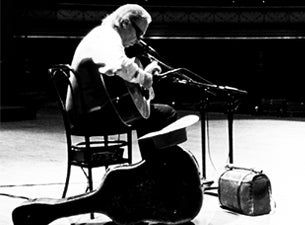
If you have ever heard Neil Young talk during one of his live performances, you will take note that he is a sincere, deep, and thoughtful man.At times, he might come across as awkward or shy. In many ways, I come across the same way.His voice thrives in his lyrics and how he strums his beloved guitar.Let’s take a closer look at the lyrics of Old Man.
The opening lyric, “Old man take a look at my life, I’m a lot like you were,” sums up the greater meaning of the song to me.It is all about the realization that you are becoming like your father, the man who created you, and going through similar hardships trying to figure out your life, just as your father did (or maybe still doing).Another stanza that sticks out to me is “I’ve been first and last, look at how the time goes past.But I’m all alone at last, rolling home to you.”I have always been told that life goes by fast, primarily by elders in my life.Neil is saying that in the end, you will be alone and fall back on what you love most and what you were build upon.Life is all about ‘finding your howl’ falling back on it, in this case of the son, his father.
Apart from the emotional meaning of the song, it is one of my favorites in the classic rock genre.Neil Young’s guitar language is articulated so uniquely. It is calm, punctual, and similar to his voice, most importantly pure.When the production is taken away surrounding each of his songs and you strip it down to the man and his beloved guitar (old black), what is left is the same as before.The passion and influence heard in his productions is only to emphasize his voice and guitar work.Neil’s voice could calm the devil.Maybe that is why my ears are seduced to such an astonishing height each time I take a listen to Old Man.
The color of my character is mostly baby blue with dark blue accents, in addition to a little bit of orange. The color scheme, even though there are three colors, is complimentary because of the two shades of blue versus the orange. Baby blue being the main color, is relatively light. This makes the character calm and soothing to the eye, which corresponds well with a hero. The saturation is right in the middle, which makes it not too dark, and not too light. Baby Blue does not have much value to it.
Light
My character's hue is pretty bright, with the colors being mainly light blue, with accents of darker blue and orange. The light is very hard because my character always sticks out and their colors never blend in, or disperse into the surroundings. The intensity is always very bright. Shadows never effect my character at all. The direction of the light can change, but for the most part is vertical because they are always standing up. However, when my character runs, it forms more of a horizontal position. The distance is mostly near, but can be far when they run away offscreen.
Shape
My character is long and drawn out when running at fast speeds. When not running at fast speeds, it stands straight up and is generally taller and slim. This allows for great speed and agility, as compared to its slower nemesis.
Antagonist:
Color
My vilan character consists of an analogous color scheme. The hue consists of a combination between tan and brown. This darker color scheme provides a subliminal connotation to a vilan-type character. The character is more on the saturated side in terms of color, which again provides a darker tone backing up the vilan-type character. The value is not totally black, but in the middle between a true light brown, and an extremely dark brown.
Light
My vilan is at times in the shadow, sneaking around. At other times my vilan is out in the open in direct light. The light is generally hard because with this show, there is not much diffusion of colors. The intensity, depending on where my vilan is, is either bright or dim. The intensity is never fully lost because the vilan never 100% goes into hiding. Again, depending on where the vilan is in the scene, the light can be near or far away. For the most part, distance is not shown by shadows, but rather a shrinking the vilans image.
Shape
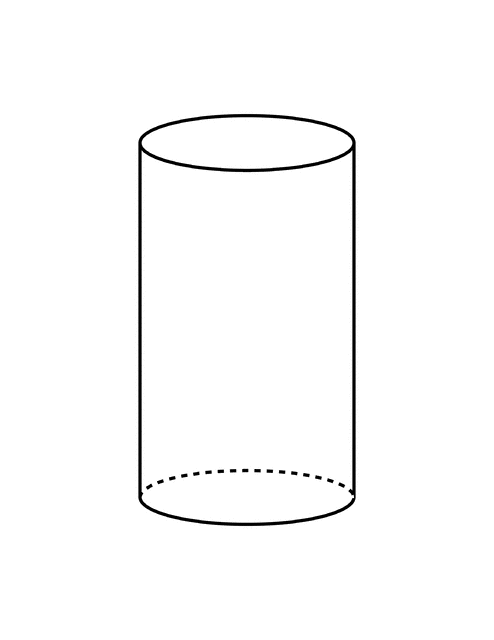
My vilan is generally a cylindrical shape. He/she is slim and slender as well, but not very fast. Never does the character get into a horizontal position unless being attacked by its counterpart.
One of the first images engrained in child's minds is that of the blue, red, and yellow beast, commonly known as Superman. He was America's first comic book super hero. Superman is a likable guy who is always looking out for the common good of his society. Clark Kent (Superman) is raised from the start with a strong moral compas. He puts his real identity aside and accepts living a life of seclusion for the welfare of all. He's also jacked and kicks every single one of his enemies butts, which is a plus. What child or human being wouldn't want to represent the qualities that Superman possesses?